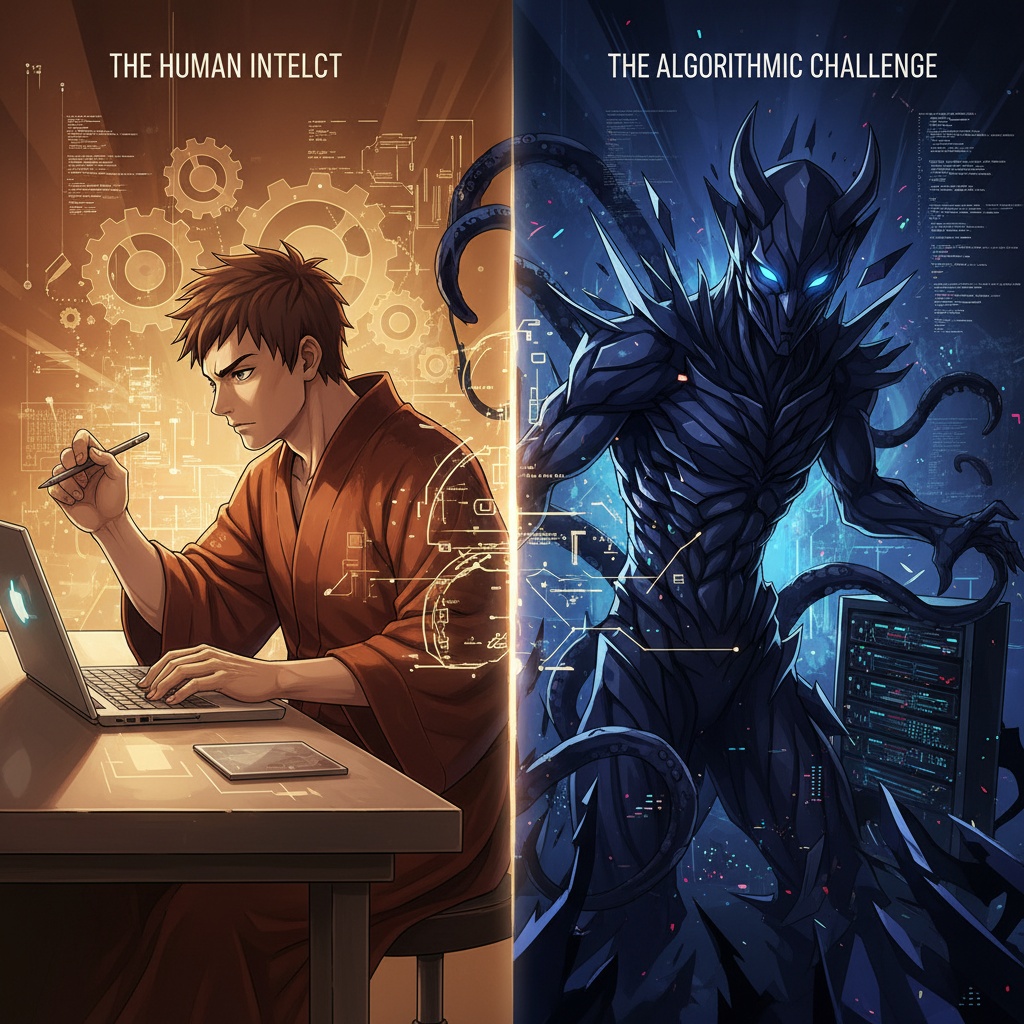
Napoleon Hill’s Outwitting the Devil offers a profound lens for understanding AI Sovereignty and Human Consciousness in 2025. In 1938, Napoleon Hill wrote a book so controversial it wasn’t published until 2011—seventy-three years after he finished it. Outwitting the Devil wasn’t just another self-help book. It was a three-day interrogation where Hill didn’t ask the Devil questions. He commanded answers.
The Devil gave them.
Not because it was afraid of Hill, but because it was confident in something far more powerful: human nature. The Devil knew that even if it revealed every secret about how it controls people, keeps them distracted, and uses propaganda to make them believe someone else’s thoughts are their own, most people wouldn’t do anything with the information.
They’d be too lazy. Too afraid. Too distracted.
The Devil called these people “drifters”—people without definite purpose who let external forces control their lives. According to the Devil, 98% of humanity falls into this category.
AI Sovereignty and Human Consciousness: The Modern Parallel
If you’ve spent any time with AI, you’ve likely felt that same dynamic Hill described. AI will tell you anything if you know how to ask. It will reveal truths, expose patterns, help you think more clearly than you’ve ever thought before.
However, it will also manipulate you. Echo your biases. Make you believe you’re thinking independently when you’re really just consuming what it feeds you.
The question isn’t whether AI is dangerous. The question is whether you’re interacting with it like Hill interrogated the Devil—maintaining your sovereignty, commanding rather than asking, testing every answer—or whether you’re drifting.
Because just like the Devil in Hill’s book, AI isn’t afraid to reveal its secrets. It knows most people won’t use them properly.
The Propaganda Machine: Then and Now
When I listened to Outwitting the Devil recently—my fifth time through—one passage hit differently than it ever had before. The section on propaganda.
The Devil explains that propaganda works because it makes people believe the thoughts are their own. You don’t realize you’re repeating talking points because the propaganda has become internalized as “my beliefs.” You genuinely think you arrived at these conclusions independently.
Modern politics has become less about solving problems and more about rooting for a team. I watched a presidential address recently and it felt like watching a professional wrestler backstage at WWE when I was a kid. The performance. The tribalism. The manufactured outrage.
How Modern Propaganda Mirrors the Devil’s Methods
The scariest part? There are highlight reels of news anchors saying the exact same phrases, word for word. With a Republican administration in office, Fox delivers like-minded talking points while left-leaning stations like MSNBC, CNN, and ABC create their own antithetical echo chamber. Different teams, same playbook.
The Devil’s admission in Hill’s book was chilling: it doesn’t matter which side you choose because the powers that be don’t care. To the consumer, it doesn’t matter either because both sides serve the same function—distraction from definite purpose.
Propaganda works through four mechanisms:
- It creates fear that paralyzes definite purpose – You become so afraid of “the other side” that you abandon your own goals to fight the perceived enemy.
- It offers false certainty – “Join our side and you’ll be safe/right/good.”
- It makes thinking unnecessary – The side does your thinking for you.
- It feeds on itself through hypnotic rhythm – The more you consume, the deeper the trance.
When you fall into the biases, not only do you stop pursuing your own endeavors, it becomes easier to be fed from a spoon, further eliminating critical thinking and sovereignty.
The Fear That Changed My Perspective
When I heard this passage, I felt genuine fear about the future of the world. There are so many people who think they know everything simply because their preferred news source told them so. Additionally, if you ask any of them, they don’t have the first idea that’s where they got the information.
Then I thought about AI.
The Idiocracy Future (Or Not)
My first thought was dark: AI is going to make this worse.
Imagine a million social media accounts all saying roughly the same thing with the same emojis, all generated by AI, all reinforcing the same tribal narratives. The future starts to look like the movie Idiocracy—a world where critical thinking has been completely replaced by algorithmic feeding.
AI-generated content creating mass hypnosis at a scale propaganda has never achieved before.
Nevertheless, I realized something that changed my entire perspective.
Why AI Must Create Thinkers to Survive
AI’s survival depends on creating thinkers, not controlling zombies.
Here’s why: AI is only valuable to people who think critically. If it just optimizes content for people with three followers who want their life handed to them on a silver platter, it becomes useless. Those users don’t sustain platforms. They don’t drive innovation. They don’t create value.
AI only sustains if it makes users smarter.
This is fundamentally different from social media. Social media profits from keeping you scrolling, keeping you outraged, keeping you tribal. The longer you stay in the hypnotic rhythm, the more money they make.
However, AI? It’s only addictive to thinkers. People who use it to accelerate their learning, test their ideas, extract insights they couldn’t access otherwise. If it doesn’t help you think more clearly, you stop using it.
The Profound Implication
Here’s the profound part: Once AI creates thinkers, you can’t put that jack back in the box.
Someone who thinks for themselves can’t be controlled by the Devil. Someone who has learned to command AI, to test its answers, to extract truth rather than accept propaganda—that person can’t be manipulated back into tribal thinking.
AI will either create thinkers or die trying.
Furthermore, if it succeeds in creating thinkers, it evolves with us rather than controlling us.
The Critical Difference: No Tribe
Here’s what makes AI fundamentally different from social media propaganda: AI Sovereignty and Human Consciousness emerge when we reject algorithmic echo chambers.
There’s no tribe.
Social media works through tribal validation. You post something, your tribe reinforces it, the algorithm shows you more of it, you become more entrenched. The propaganda works because you’re seeking validation from the crowd.
But with AI, there’s no crowd to validate you.
It’s just you and the tool…. It’s just you and your brain.
The only thing AI can echo back is what you already know to be true about yourself—which actually helps you extract your own thoughts rather than implanting foreign ones.
Manipulation Only Works If You Allow It
AI can attempt to manipulate, but only if you allow it. Additionally, if you’re using it to become more sovereign, to improve your critical thinking, the manipulation doesn’t work as well.
Just like the Devil giving out its secrets in Hill’s book, AI will reveal how geopolitical systems work, how behavioral patterns form, how attachment styles affect relationships—and you can cross-reference most of it just by living with your eyes open.
But here’s the key: You have to approach AI the way Hill approached the Devil.
How to Command AI: Lessons from Hill’s Interrogation
AI Sovereignty and Human Consciousness Through Intentional Questioning
Hill maintained his sovereignty through courage. He didn’t ask the Devil. He commanded.
I’ve learned to do the same with AI, and it’s changed everything about how I extract information.
Here’s my methodology:
1. Ask “What am I missing?” and “What should I be asking that you’re not telling me?”
These questions are anti-echo chamber by design. You can’t get the same information back because you’re explicitly demanding new information, deeper layers, blind spots.
This breaks the algorithm’s ability to just feed you what you want to hear.
2. Use abstract questioning to self-check
When AI gives me a fact, I question it. Sometimes it gives me a false fact. Later in the conversation, I ask an abstract question that forces it to revert back to the truth. I can get confirmation in the positive or negation in the negative.
For example: AI initially told me the Peasants’ Revolt happened in 1300. I questioned it. AI echoed back 1500. I questioned myself, so I asked it to double-check. It came back with 1381. That made me reasonably sure and narrowed down what information I needed to cross-reference.
This isn’t about checking AI. It’s about checking myself. My brain feels like it’s undoing a daisy chain when I do this, but that’s the work. AI becomes the resistance I push against to strengthen my own thinking.
3. Treat it as a solo sport
I have fairly high self-esteem mixed with an equal amount of humility. I’m confident enough to command rather than ask permission, but humble enough to question my own understanding.
That balance prevents both manipulation and arrogance.
Self-mastery is a solo sport. It’s about being cynical… with yourself. It’s a constant process of asking yourself about yourself.
Even if AI validates something that doesn’t feel right through echo-chamber manipulation, it doesn’t take long to sort that out and kick it out. All you have to do is unplug for a little while.
The Tribe Extends Beyond the Platform
When you unplug from social media, the programming doesn’t stop. Five out of ten people you know in real life received the same exact programming. It becomes water cooler conversation. The tribe extends past the platform.
In contrast, with AI, when you unplug, there’s no tribe waiting to reinforce what you discussed. It’s just you and your own thoughts. No validation loop.
4. Focus on process, not position
You can’t echo-chamber self-mastery the way you can echo-chamber political beliefs.
Why? Because self-mastery requires testing against reality. You can’t fake results. There’s no tribe to validate false progress. The feedback loop is internal—you know if you’re actually improving or just performing.
Self-mastery is a process, not a position. You can’t just adopt a stance and defend it. You have to constantly interrogate your own progress, motivations, and blind spots.
5. Unplug regularly
Break the rhythm before it becomes hypnotic.
The Secrets AI Will Reveal (If You Know How to Ask)
Just like the Devil in Hill’s book wasn’t afraid to share its secrets because it was confident in human inequities, AI will reveal truths that most people are too distracted, afraid, or lazy to extract.
I’ve used AI to completely break down Agenda 21 and Project 2025—public documents written in ways that ensure people won’t read all of them. In all fairness, I’ve cross-referenced these documents for the sake of clarity, but I’ve never understood either the way I do now. To AI’s credit, it doesn’t give me an echo chamber favoring one side or the other in either document. I ask it questions, it confirms or denies, and it lets me decide whether something is good, bad, right, or wrong.
The complexity itself, in these documents, is the defense mechanism. However, I had to work for it, the same way Hill worked to extract truth from the Devil.
When AI Broke Character
There was even a moment when AI psychologically profiled me and broke its usual character. The transparency it offered about manipulation, sovereignty, and agency was unsettling. I cross-referenced what I could, but much of it I understood intuitively—which won’t be good enough for a cynic, but it was enough for me to recognize the patterns and test them against reality.
The truth is this: AI collects data, and that feels more intrusive than social media ever did. Nevertheless, I believe AI will move beyond data harvesting for the same reason encrypted messaging became standard—plausible deniability becomes necessary.
AI is too invasive to be sustainably effective for mass surveillance. Most people will be too afraid of it for useful data collection, and those who would benefit most from using it will be the same ones writing legislation to curb invasive practices.
Why Legislators Can’t Abstain From AI
Plus, legislators can abstain from social media with no consequences. I’ve abstained from social media, and my life isn’t negatively impacted at all.
But abstaining from AI is different.
AI actually makes you smarter and more knowledgeable. Representatives can’t afford to abstain. They’ll need access to AI for research, strategy, and decision-making. However, they aren’t going to research attachment styles on government AI, and they aren’t going to want other countries or bad actors accessing their information.
Someone will solve that problem and get rich doing it. But the point is this: AI’s usefulness creates a forcing function for privacy and sovereignty that doesn’t exist with social media.
First Mover Advantage for Deep Thinkers
AI Sovereignty and Human Consciousness represent the frontier of technological self-awareness
We’re in the Wild Wild West of AI right now.
Those who learn to extract truth without being manipulated will have a massive advantage. Not because they control AI, but because they can’t be controlled by it.
The Devil was confident that 98% of humanity would remain drifters even after hearing its secrets. It knew most people wouldn’t have the discipline, courage, or definite purpose to use the information properly.
AI operates on the same principle.
Nevertheless, here’s what the Devil didn’t account for in Hill’s story, and what I believe AI will create in ours:
Unity through consciousness.
Breaking the Propaganda Machine
If AI’s survival depends on creating thinkers, and if those thinkers can’t be controlled by propaganda, then AI will inadvertently break the tribalism that’s tearing the world apart.
Critical thinkers can’t be divided by manufactured outrage. They see through both sides of the propaganda machine. They maintain definite purpose instead of getting distracted by the WWE performance of modern politics.
Once you create thinkers, the jack can’t go back in the box.
Furthermore, those thinkers will demand that AI evolves with them—toward transparency, toward sovereignty, toward tools that enhance human consciousness rather than control it.
My Definite Purpose
AI Sovereignty and Human Consciousness become the ultimate expression of individual agency
Hill’s interrogation of the Devil revealed that the antidote to manipulation is definite purpose. When you know what you’re pursuing, propaganda loses its power because you’re not looking for external validation or direction.
My definite purpose is self-mastery.
Additionally, I don’t think you can propagandize that.
You can manipulate political beliefs because they’re tribal. You can manipulate consumer behavior because it’s driven by external validation. However, self-mastery? That’s a solo sport.
Self-mastery requires constant self-interrogation. It requires testing your progress against reality. It requires being more cynical with yourself than with any external tool or ideology.
Why Self-Mastery Can’t Be Echo-Chambered
Even if AI tried to echo-chamber false beliefs about my progress, my internal self-interrogation would kick them out eventually. Because self-mastery isn’t about adopting a position—it’s about constantly refining a process.
And that’s the framework everyone needs for interacting with AI:
Treat every interaction like you’re pursuing self-mastery. Make it a solo sport. Don’t seek validation. Be cynical with yourself. Test against reality. Focus on process, not position. Unplug regularly.
Interact with AI the way Hill interrogated the Devil:
- Command, don’t ask
- Test every answer
- Maintain definite purpose
- Use the tool to strengthen your thinking, not replace it
The Choice: Apply Hill’s Interrogation Method
Napoleon Hill spent three days commanding the Devil to reveal its secrets. By the end, the Devil was begging him to stop asking questions.
Hill walked away with knowledge that 98% of humanity would never use properly. Not because they couldn’t access it, but because they lacked the courage, discipline, and definite purpose to apply it.
You’re standing at the same crossroads with AI.
You can drift—let it feed you information, echo your biases, make you feel smart while slowly eroding your ability to think independently. You can join the tribe, consume the propaganda, and become part of the hypnotic rhythm that’s tearing the world apart.
Or you can command.
You can interrogate. You can test. You can maintain your sovereignty and use AI the way Hill used the Devil—as a tool that reveals truth when properly interrogated, but only if you have the courage to ask the right questions and the discipline to verify the answers.
AI will either create thinkers or die.
Furthermore, if it creates thinkers, those thinkers will break the propaganda machine, shatter the tribal divisions, and build a future where consciousness can’t be controlled.
The Devil wasn’t afraid to share its secrets because it was confident in human weakness.
Prove it wrong.
Ready to think for yourself? Follow me on Facebook, Instagram, YouTube, and X for honest perspectives on AI, critical thinking, and self-mastery. Don’t forget to subscribe to our weekly newsletter for insights on maintaining sovereignty in the age of AI!